Atlantic Canada Beached Bird Survey
Bird Studies Canada is
looking for volunteers to participate in our Maritime beached bird
surveys in Prince Edward Island, Cape Breton and in the Bay of Fundy. If you already spend
time walking a beach in either of these areas, or would like to start,
we hope you'll consider volunteering for this program.
Why do we need Beached Bird Surveys?
Hundreds of ships pass through the waters off the Atlantic Canadian coast daily. This traffic
creates a real problem for birds. In particular, the illegal dumping
of oily bilge waste leads to chronic petroleum pollution. Oil
pollution poses a great threat to pelagic seabirds, the bodies of
which are separated from near zero-degree water by a natural
"survival suit" of feathers. Like a pinhole in a diving
suit, a drop of oil the size of a coin sentences the bird to a slow,
painful death from hypothermia and starvation. The bird also tries to
preen itself clean of the toxic oil, ingesting it in the process.
Poisons in the oil can lead to delayed death. Either way, an oiled
bird is a dead bird.
Latest estimates from the
Canadian Wildlife Service, who are partners with Bird Studies Canada
in the Cape Breton survey, indicate that about 300,000 birds die each
year as a result of chronic oil pollution. This is comparable to the
impact of the Exxon Valdez spill each year!
Usually the first sign of
impact from this oil is the appearance of dead and dying birds on
beaches. By systematically monitoring birds on beaches - oiled and
clean - we can detect fluctuations in both the amount of oil pollution
occurring in the Atlantic and in the Bay of Fundy, as well as its
effect on waterbirds. This type of information is extremely important
in helping to eliminate the problem.
Cape Breton is an area of
extreme risk for birds oiled at sea, due to both the heavy shipping
traffic through the Cabot Strait and the concentrations of marine
birds that use this water in winter. Beached bird survey participants
will be helping to develop a baseline index of oiled birds in Cape
Breton. If large spills occur, this baseline can be used to estimate
the impact of the spills on seabirds. Beached bird survey data can
also be used to determine what species of seabirds are most affected
by oiling, what time of year the problem is most severe, and whether
the proportion of oiled birds washing up on beaches is changing over
time.
Oiling could also be a
problem in the Bay of Fundy, with many large tankers going to and from
the oil refinery in Saint John. Industrial garbage and debris from the
Bay of Fundy's extensive fish-farming industry could also have an
impact on the area's important bird populations. The Bay of Fundy area
contains no less than 9 internationally recognized Important Bird
Areas (IBA). Hundreds of thousands of seabirds travel through this
area during the year, including a significant number of overwintering
birds.
On the south coast of PEI,
Charlottetown Harbour is a deep water commercial harbour that
remains ice-free from April 15 to December 31, with occasional
icebreaker support late in the shipping season to complete seasonal
exports. As the capital of PEI and largest
city in the province, Charlottetowns harbour hosts the largest
volume of shipping traffic in PEI. In addition, plans for the marine
terminals expansion have been submitted and shipping traffic into
the harbour is likely to increase in the near future. Despite this
activity, Charlottetown Harbour continues to be actively used for
foraging by several species of cormorants, ducks and terns, and is
near one Important Bird Area, Orwell Bay, where up to 2,500 Canada
Geese and thousands of other waterfowl are known to stage during
spring and fall migration. As a result, there is a relatively high
likelihood of birds washing up contaminated with oil in this harbour,
making it a priority for establishing beached bird survey sites. We
would like to recruit new volunteers from the surrounding community
to begin covering these beaches beginning in October 2006. It is
particularly important that this project begin prior to the proposed
harbour expansion in order to be able to determine what effects the
expansion may have on oiling and deposition rates in the harbour.
Our beached bird program is a
part of a growing network of beached bird surveys throughout the
world. Many other organisations conduct similar surveys on both coasts
of North America, and also in Europe. In Atlantic Canada, a beached
bird survey has been in place in southeastern Newfoundland since 1984.
Very little information has been gathered in Cape Breton and in the
Bay of Fundy, two very important areas where human activity could be
impacting bird populations.
How can you get involved?
We are looking for keen
volunteers to conduct monthly surveys year-round if possible,
particularly for the Charlottetown Harbour area.
If you would like to volunteer,
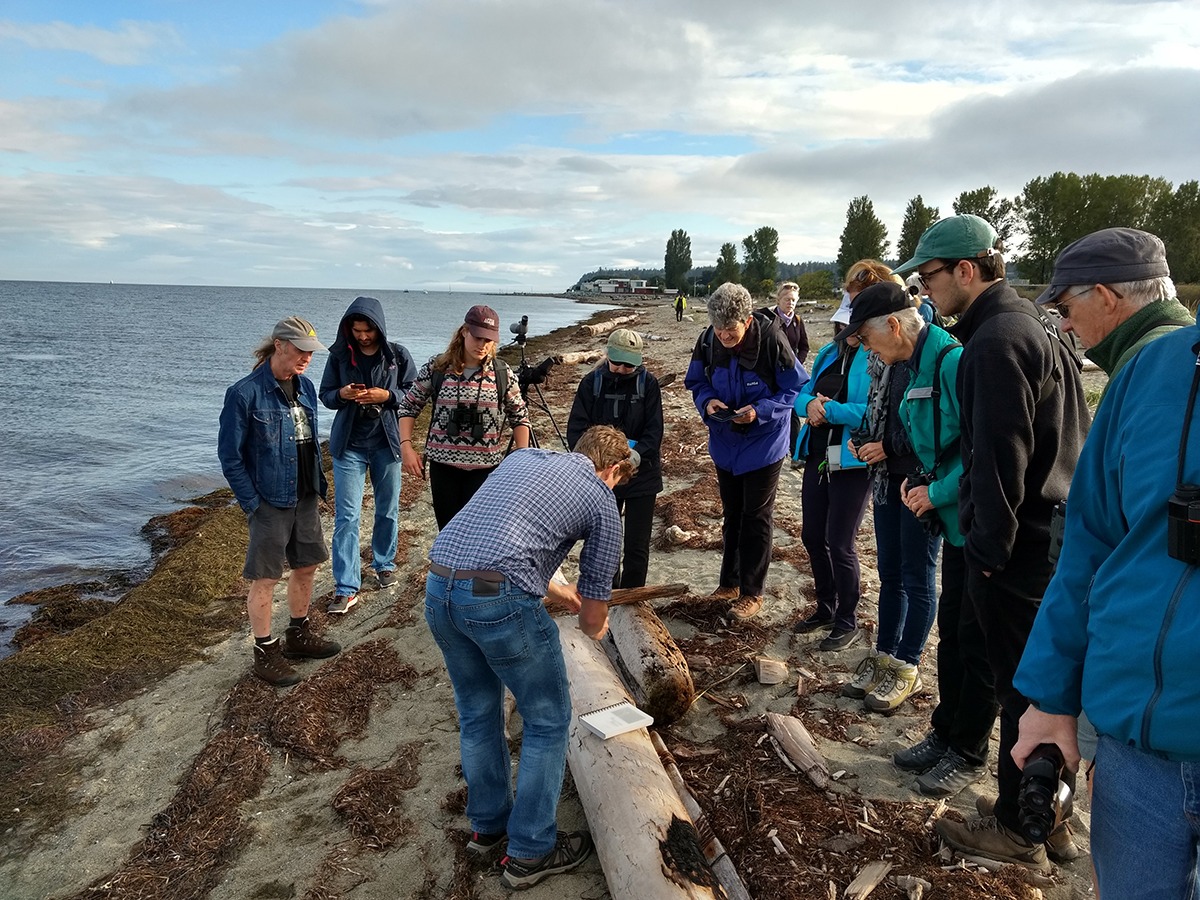
you will be asked to walk a stretch of beach once every month from
November to April, keeping an eye out for beached birds. You should
have a working knowledge of bird identification. You will also be
asked to note various physical characteristics of the beach (wrack
thickness, amount of driftwood), along with weather conditions. The
time it takes to survey a beach section depends on the length of beach
you wish to survey. The weather will not always be pleasant (!) and
you will probably not find beached birds on every survey.
If you are a keen birder or
beachcomber who would like to get involved with this project, or if
you would like to learn more about it, please contact Greg Campbell by
phone, email or regular mail. If you decide to volunteer, you will
receive an information kit with an instruction guide, data forms,
latex gloves (in case you need to handle carcasses), and a map of your
survey area.
For information contact:
Greg Campbell
- Project Biologist
Bird Studies Canada - Atlantic Region
P.O. Box 6227, 17 Waterfowl Lane Sackville, NB E4L 1G6
Phone: (506) 364-5025
Fax: (506) 364-5062
Email: gcampbell@bsc-eoc.org