
Bicknell’s Thrush Conservation Program
Birds Canada leads monitoring, research, and stewardship programs for at-risk forest birds in several provinces. Programs focus on the species and habitats of highest priority for conservation. Our research helps track populations, assess threats such as habitat fragmentation, increase our understanding of habitat needs, and direct conservation action. We’re working on the ground with landowners, communities, and various stakeholders to promote stewardship for these birds and their habitats.
The Bicknell’s Thrush, a Threatened songbird, is among the landbird species of highest conservation concern in North America. In Atlantic Canada, the species’ breeding habitats include the thick conifer forests found on mountaintops and coastal headlands. It is also found in regenerating high-elevation industrial forest where tree density is very high. This habitat is at risk from wind power development, some forestry practices, acidic precipitation, mercury deposition, and climatic warming.
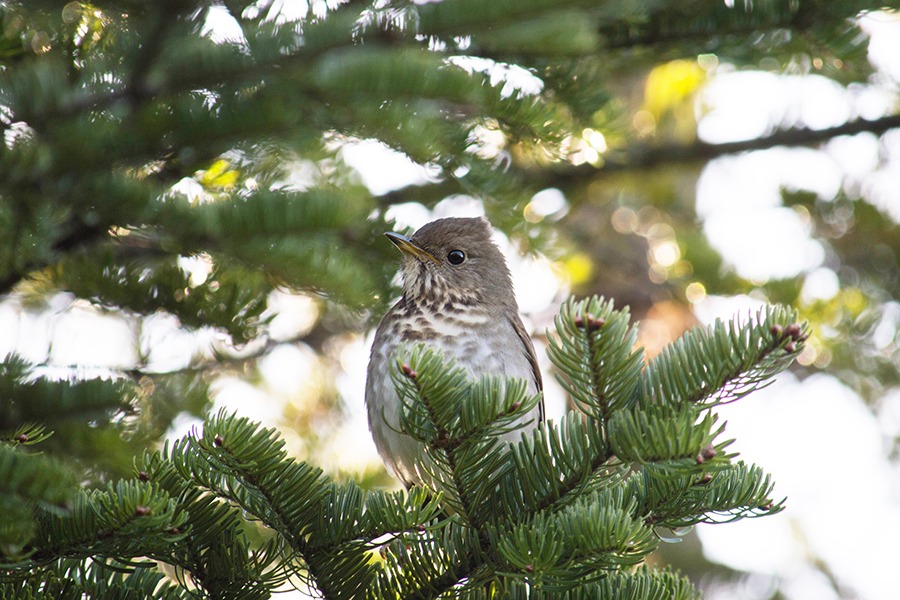
Photo: Chris Ward
Birds Canada has been delivering the High Elevation Landbird Program in New Brunswick and Nova Scotia since 2002, and is the Canadian co-coordinator of the International Bicknell’s Thrush Conservation Group. The multi-faceted High Elevation Landbird Program includes working with local communities, industry, and government to conserve Bicknell’s Thrush habitat, as well as monitoring and research efforts to track population trends as part of regional and international efforts to track the species’ range-wide recovery.
For more information, contact:
Amy-Lee Kouwenberg
Bird Projects Biologist, Atlantic Region
akouwenberg@birdscanada.org
