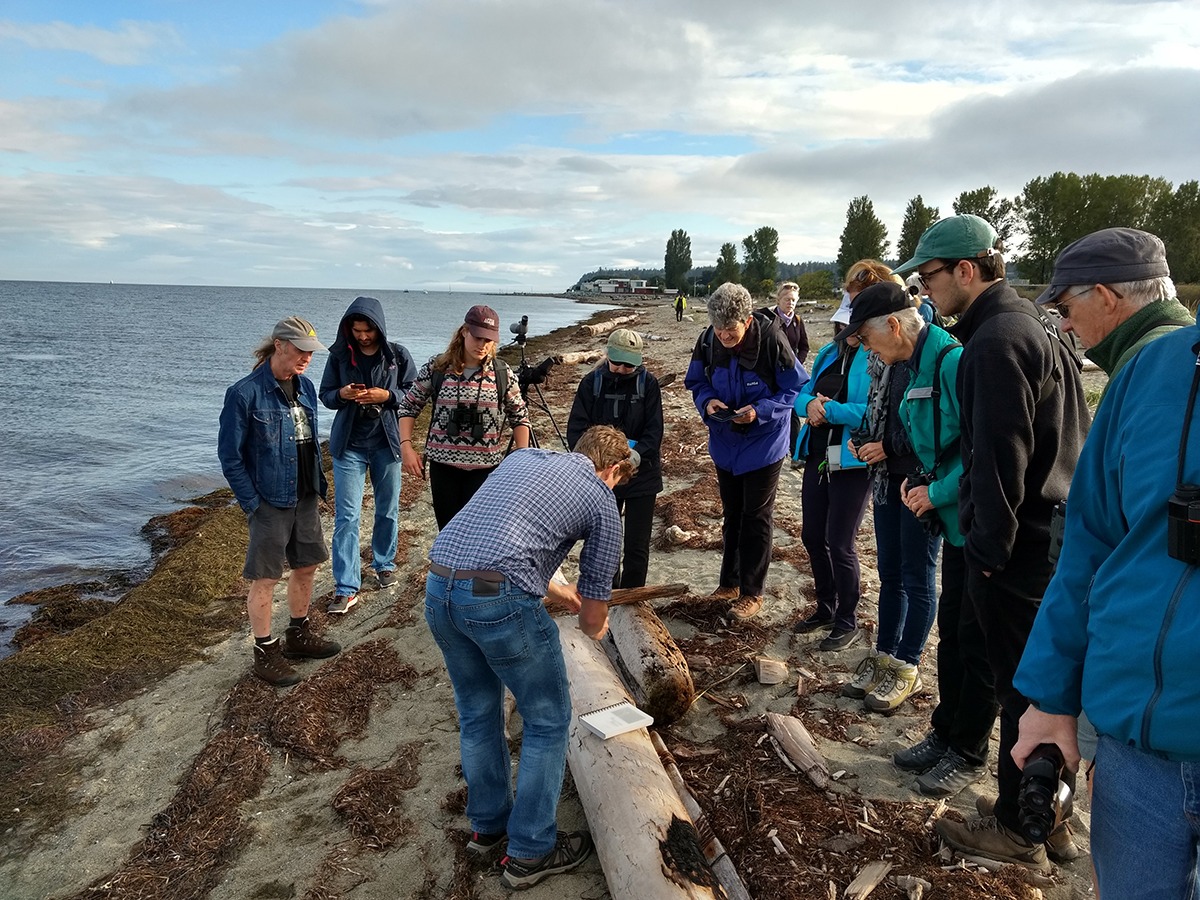
British Columbia Beached Bird Survey

Dead and dying birds tend to wash up on beaches. The goals of the Beached Bird Survey are to collect baseline information on the causes and rates of beached bird mortality, compare current rates with estimates from 10 years ago, and expand the coverage to a larger area of the BC Coast.

The coastal waters of British Columbia support some of the highest densities of seabirds, waterfowl and shorebirds in the eastern North Pacific. The British Columbia coast also supports a large amount of marine shipping traffic. This traffic means that there will be both major and minor spills of petroleum products on occasion, as well as chronic petroleum pollution.

Oil pollution poses a great threat to pelagic seabirds and coastal waterbirds because the physical properties of oil degrade the insulating and waterproofing properties of feathers. This is particularly true in winter when air and water temperatures are colder and birds are more vulnerable to exposure. In fact, in winter, a spot of oil an inch in diameter on the belly of a bird is sufficient to kill it. Ingestion or inhalation of oil can also poison birds internally. In some parts of the world chronic oiling is responsible for the deaths of thousands of seabirds each year.

Monitoring the levels of chronic oiling in BC is important and beached bird surveys are an effective way of doing this. Volunteer beached bird surveys conducted from 1989 to 1993 provided the first baseline data for the BC coast. Results of this survey indicate that 6% of beached bird mortality is due to oiling. However, no recent information on beached bird mortality has been collected. The primary aims of the 2002-2004 BC Beached Bird Survey are to increase our baseline information on the causes and rates of beached bird mortality, compare current rates with estimates from 10 years ago, and expand the coverage to a larger area of the BC Coast. By monitoring birds on beaches and keeping track of whether or not they have been affected by oil pollution, we can detect fluctuations in both the amount of oil pollution occurring in BC, as well as its effect on waterbirds. Beached bird survey data can also be used to determine what species of seabirds are most affected by oiling, what time of year the problem is most severe, and whether the proportion of oiled birds washing up on beaches is changing over time.

Other beached bird surveys are also occurring in North America. Bird Studies Canada coordinates surveys in Atlantic Canada through the Cape Breton Beached Bird Survey, and the COASST (Coastal Observation and Seabird Survey Team) program co-ordinates surveys in Washington State. 

How Do I Join the Survey?

If there is a beach in your neighbourhood that you already like to walk, you are halfway there. The steps involved in joining the BC Beached Bird Survey are:

  1. Identify a beach you like to walk or beachcomb
  2. Contact the BC Beached Bird Survey Co-ordinator to discuss your beach and request a survey kit
  3. Survey your stretch of beach once per month, during the last week of the month if possible
  4. Send in your data!

You will also be asked to note physical characteristics of the beach (wrack thickness, amount of driftwood), along with weather conditions. The time it takes to survey a beach section depends on the length of beach you wish to survey.

Surveys are to begin in August, 2002, but participants are welcome to join in at any stage of the proposed two-year survey.

If you decide to participate in the survey, you will receive a survey kit consisting of:

  • instructions and datasheets
  • 10 tags  to tag beached birds to identify that you have discovered them on a previous survey
  • gloves  to avoid contamination while touching the dead birds
  • maps and tidetables
  • plastic ruler  to measure features on the bird to aid in identification


To join the BC Beached Bird Survey  and receive your copy of the BCBBS protocol manual  and the necessary recording forms, please contact:


Peter Davidson
BC Projects Coordinator 
Bird Studies Canada 5421 Robertson Road, RR 1 
Delta, BC V4K 3N2 
Toll-free: 1-877-349-2473 
E-mail:
pdavidson@bsc-eoc.org


By participating in beached bird surveys you are making a significant contribution to environmental stewardship by helping to develop a baseline index of oiled birds in British Columbia. It is important that monitoring our environment involves the general public and not just government agencies, and by volunteering in a science-based monitoring program you are helping to maintain and improve the quality of our marine environment.

Thank you!


Site Map
Return to Top of Page
Return to Previous Page